


Thanks to the process generated by LiveSeeding with the support of the Spanish City Network for Agroecology, Resolution 5/2025, adopted at the 11th Session of the Governing Body of the International Treaty on Plant Genetic Resources for Food and Agriculture (Lima, November 2025), explicitly incorporates collaboration with municipalities and municipal networks in urban and peri-urban food systems as key actors in the conservation and sustainable use of plant genetic resources for food and agriculture; and promotes their participation in its Ad Hoc Technical Committee on Conservation and Sustainable Use.
A milestone for local governance of cultivated biodiversity
Last November, the Governing Body of the International Treaty on Plant Genetic Resources for Food and Agriculture (ITPGRFA) adopted in Lima Resolution 5/2025 on the implementation of Articles 5 and 6 of the Treaty, dedicated to the conservation and sustainable use of plant genetic resources for food and agriculture (PGRFA). For the first time, this resolution explicitly recognises the role that municipalities and their networks can play in this area.
Specifically, the Resolution requests the Treaty Secretariat to, in collaboration with relevant stakeholders and subject to the availability of financial resources, include “activities with the peri-urban and urban food systems sector, including city networks, highlighting the role that cities an play in the conservation and sustainable use of PGRFA, and promote the participation of stakeholders from these sectors in the work of the Ad Hoc Technical Committee on Conservation and Sustainable Use of Plant Genetic Resources for Food and Agriculture”.
“We welcome this recognition as a step of great political significance, which opens the door to the integration of municipal action into the global governance of cultivated biodiversity”, says Enrique Pueyo, President of the Spanish City Network for Agroecology (RMAe) and Mayor of Ainsa-Sobrarbe. “We, as a platform bringing together 40 Spanish local governments, we are ready to begin the collaboration”, concludes Pueyo.
The road to Lima: from the Granollers Symposium to the FAO Treaty
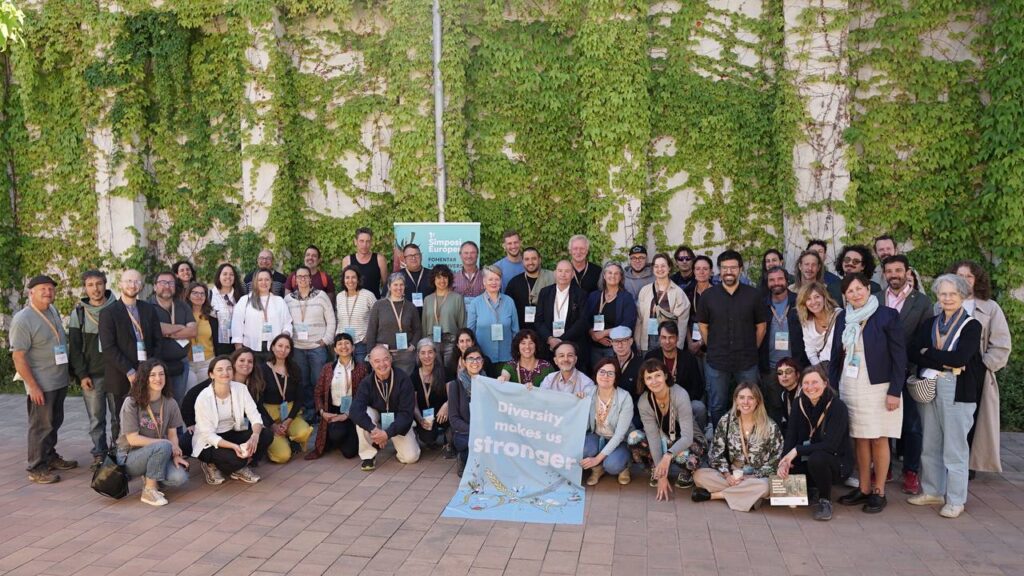
This progress is rooted in a sustained political process. In April 2025, within the framework of LiveSeeding, it was held in Granollers (Spain) the 1er European Symposium “Fostering Cultivated Biodiversity Through Local Food Policies”. The event brought together around 100 representatives from European municipalities, regional governments, research institutions, farmer organisations, consumer groups, and civil society.
The Symposium culminated in the adoption of the Granollers Manifesto “Promoting Cultivated Biodiversity in European Municipalities”. “This document represents a roadmap with a vision and concrete actions to integrate cultivated biodiversity into multi-level food policies”, says Mariano Iossa, LiveSeeding Project Coordinator at FiBL Europe.
Building on these outcomes, the Ad Hoc Technical Committee on Conservation and Sustainable Use of PGRFA (ACSU) developed and submitted to the Governing Body of the ITPGRFA the document “Conservation and Sustainable Use of PGRFA in Urban and Peri-Urban Food Systems”, which laid the technical groundwork for the recognition enshrined in Resolution 5/2025.
Municipalities on the political map of the Seed Treaty
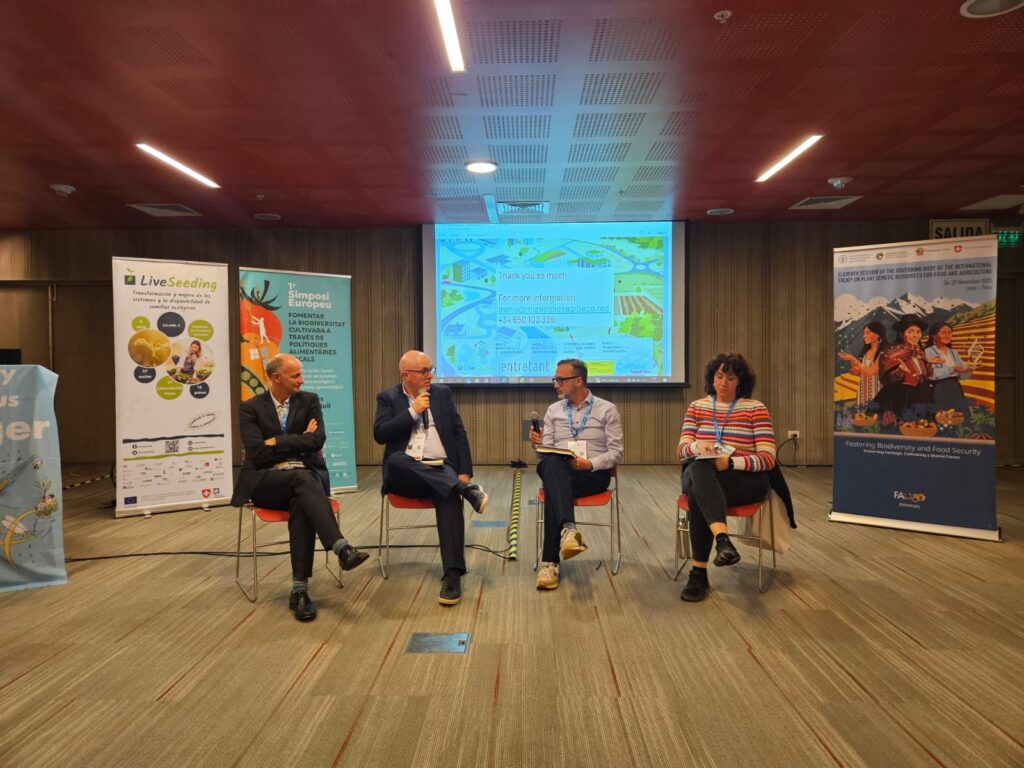
On 24 November 2025, during the 11th Session of the Governing Body in Lima, RMAe —together with the LiveSeeding project, Rete Semi Rurali, ProSpecieRara and RMAe — held the side event “Fostering Cultivated Biodiversity Through Local Food Policies”. The event brought together around 40 people in an active and diverse gathering, including representatives from European organisations and countries of the Global South.
The event showcased municipal policies directly promoting cultivated biodiversity in Scandicci (Italy), Geneva (Switzerland), and Granollers, Aínsa-Sobrarbe, Orduña, and Vitoria-Gasteiz (Spain), demonstrating how local governments are developing effective actions to integrate cultivated biodiversity into sustainable, healthy, and resilient local agri-food systems.
Two key resources for moving forward
Within the framework of the LiveSeeding project, two key resources have been developed to strengthen cultivated biodiversity in multi-level food policy. First, the Granollers Manifesto, available in 9 languages, which positions cultivated biodiversity as a lever for building sustainable and healthy local food systems across Europe, and which sets out 32 municipal strategic actions and a series of demands at EU, national and regional levels.
On the other hand, the Manual on the Integration of Cultivated Biodiversity in Local Organic and Agroecology-oriented Food Policies, develops the Manifesto’s proposals and brings together 32 examples of good practice from European municipalities.
Both documents are reference resources for other municipalities and international networks.
Next steps: European forum
The first opportunity to continue this work collectively will be the Let’s Liberate Diversity Forum, to be held in Scandicci (Italy) on 24 May 2026, where LiveSeeding will facilitate two workshops on the topic:
Workshop 1: The Right to Sustainable and Healthy Food — Presenting the right to food as a fundamental human right, highlighting the need for political action to implement it, and showcasing concrete initiatives that translate this principle into practice at different governance levels. The workshop will feature the participation of FAO’s Right to Food Unit and will present Geneva’s policies in this area. It will be moderated by Mariano Iossa, LiveSeeding Project Coordinator at FiBL Europe.
Workshop 2: Enhancing Cultivated Biodiversity Through Local Food Policies — Highlighting the role of municipalities as key actors in the dynamic management of cultivated biodiversity, identifying opportunities to integrate it more effectively into local food policies, and reflecting on the multilevel governance changes needed to strengthen the role of local entities. The workshop will feature municipal representatives from Bergamo and Granollers, as well as a representative of the FAO International Seed Treaty to present Resolution 5/2025. Moderated by María Carrascosa, Project Manager at RMAe, and Francesca Gori, LiveSeeding Manager at Rete Semi Rurali.
About the LiveSeeding project
LiveSeeding is a 4-year Innovation Action on organic seed and plant breeding to accelerate sustainable and diverse food systems in Europe, which started in October 2022. LiveSeeding provides science-based evidence and best practice solutions to help achieve 100 % organic seed. The project is funded by the European Union, the Swiss State Secretariat for Education, Research and Innovation (SERI) and UK Research and Innovation (UKRI). To deliver on such an ambitious goal, LiveSeeding brings together 37 organisations from a wide range of sectors operating in 16 European countries.
Media contact
María Carrascosa, 0034 650102339 | maria@municipiosagroeco.red