


At BIOFACH 2026, LiveSeeding held a congress session to address a structural challenge facing the organic sector: how to secure stable, long-term financing for organic plant breeding?
Organic plant breeders develop varieties adapted to organic farming systems. These varieties strengthen biodiversity, resilience and sustainability for organic producers and for the wider agri-food system. However, their work depends on reliable and diversified financial support.
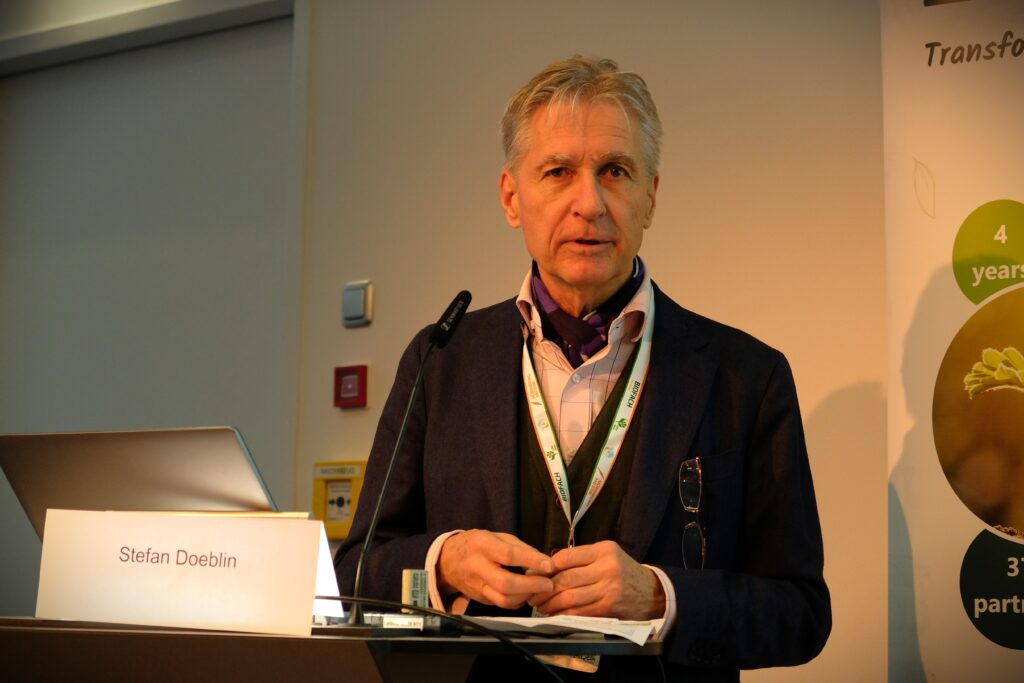
The session, moderated by Stefan Doeblin from Lebende Samen & Living Seeds e.V., brought together representatives from research, retail, farmer organisations, foundations and European level advocacy to discuss practical ways forward.
Why financing organic breeding requires structural solutions
Organic plant breeding differs from short-term research and innovation activities. It is a continuous process that extends over many years. Developing a new variety adapted to organic conditions can take ten to fifteen years. During this time, breeders maintain field trials, conduct multi location testing, select for resilience and quality, and manage genetic resources.
Such long development cycles require continuity. However, funding structures frequently operate on shorter timeframes. Public support is often project-based and focused on research components rather than on sustaining entire breeding pipelines. Market revenues from organic seed sales are generally lower than in conventional systems, where higher volumes and different intellectual property frameworks can generate stronger financial returns.
Across Europe, many organic breeding initiatives are small or medium-sized organisations. They work in fragmented markets and must dedicate considerable time to fundraising. Annual income can fluctuate, making long-term staffing and infrastructure planning more difficult.
The LiveSeeding BIOFACH session explored how this gap can be addressed through more diversified and coordinated financing approaches.
German speaking countries offer working examples
One part of the discussion focused on examples where funding models are already in place.
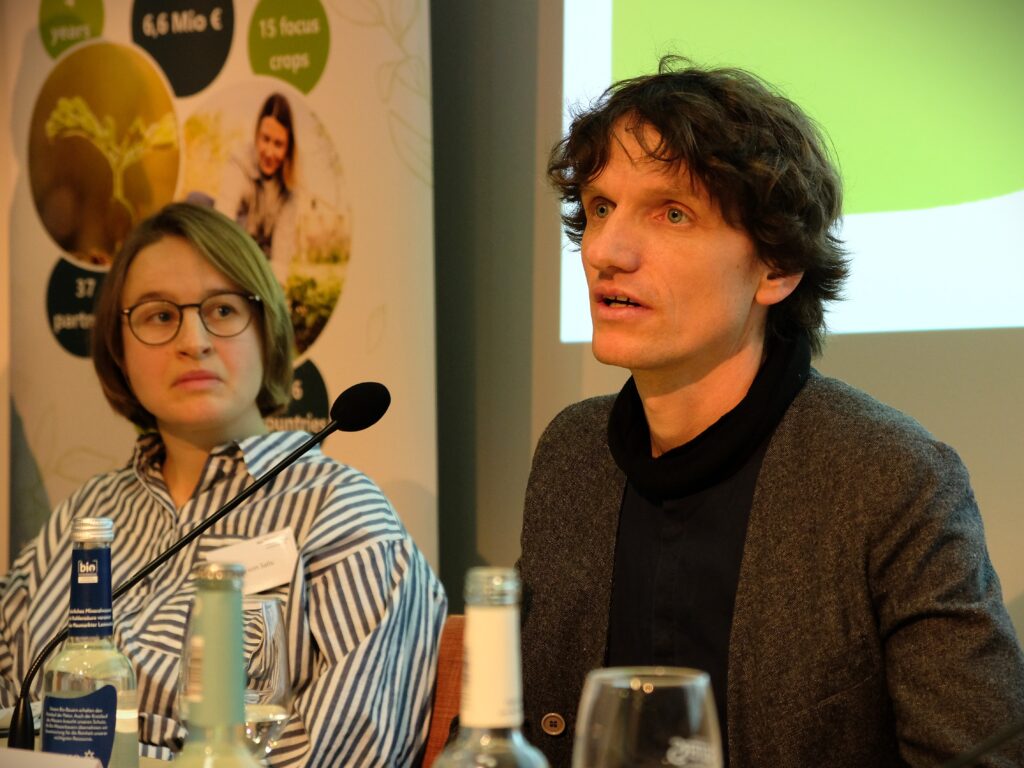
In German speaking countries, foundation-based financing plays an important role. Jytte v Salis from GLS Treuhand presented the Seed Fund of Zukunftsstiftung Landwirtschaft. The Fund pools financial contributions from private foundations, organic companies and individual donors. It currently supports thirteen plant breeding initiatives in Germany and Switzerland, covering cereals, vegetables and fruit.
This model demonstrates that structured philanthropic support, combined with engagement from organic businesses, can provide more predictable multi-year financing. It also shows that cooperation between civil society actors and market participants can strengthen breeding capacity at national level.
Retail involvement was addressed by Lukas Nossol from dennree GmbH. He outlined how retailers can contribute to awareness raising by communicating the role of organic breeding within the value chain. Explaining breeding processes and their long-term costs to consumers remains complex. At the same time, greater transparency can help clarify why sustained financial support is necessary to maintain diversity and quality in organic production.
Urs Brändli from Bio Suisse highlighted the perspective of farmers. He emphasised that farmers and consumers already navigate a broad range of sustainability requirements and information. Support for breeding should, therefore, be embedded in credible and comprehensible structures. In Switzerland, Bio Suisse contributes to organic breeding through annual donation-based mechanisms that link producer organisations with breeding initiatives.
European cooperation and matchfunding initiatives
Diversification also requires clear governance. Funding arrangements must ensure transparency, accountability and alignment with organic principles. They should provide breeders with sufficient autonomy to pursue long term objectives while maintaining close links with market needs and societal expectations.
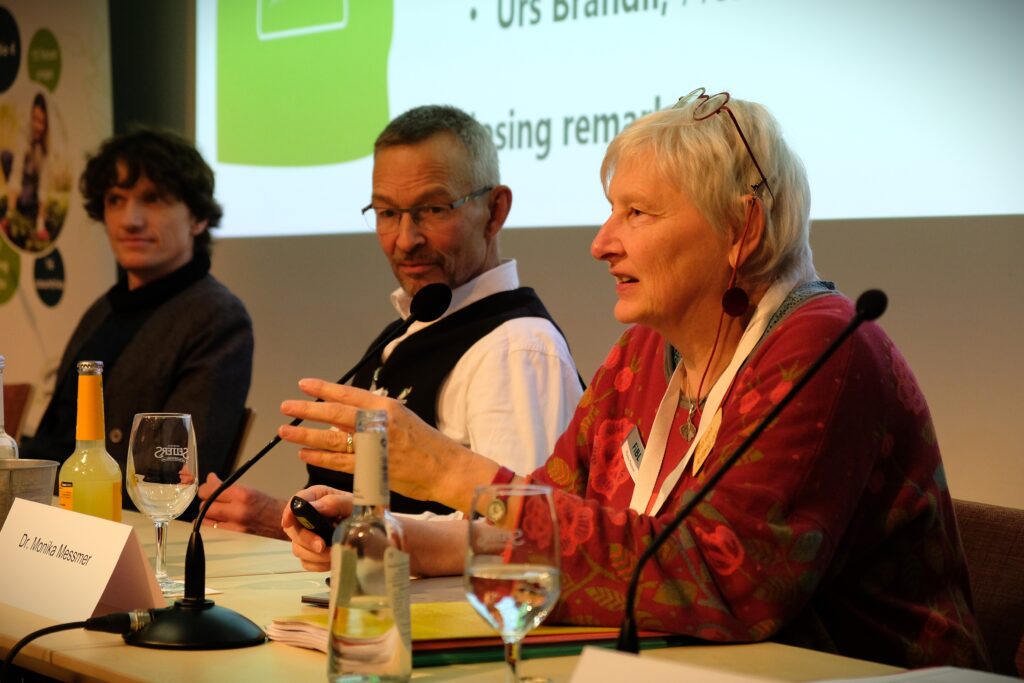
Dr Monika Messmer from FiBL Switzerland presented an overview of existing and potential financing pathways. She emphasised that long-term commitment from both public institutions and private actors is essential. Breeding programmes cannot operate effectively if support is limited to short project cycles. Continuity of personnel, infrastructure and field experimentation depends on predictable financing.
She also underlined the need for stronger alignment between breeders and market actors. Varieties developed for organic systems must respond to agronomic realities, consumer expectations and processing requirements. Effective communication along the value chain can therefore strengthen both technical relevance and financial support. Her conclusion was direct. Efforts need to grow beyond national borders. European coordination is required if organic breeding is to scale.
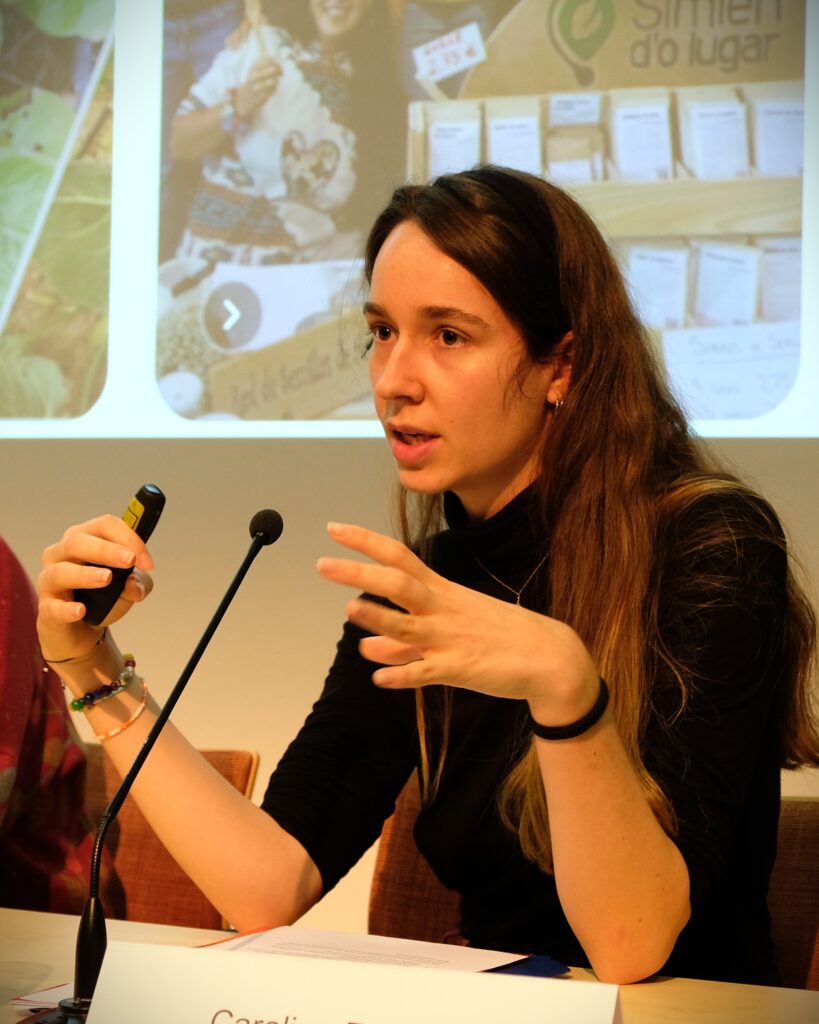
Caroline Formont from IFOAM Organics Europe presented a Spanish initiative called “We Sow Diversity.” The project applied a matchfunding approach to raise financial support for four organisations working on local and traditional seeds. Contributions from individuals were combined with institutional backing to amplify impact. While smaller in scale than foundation based funds, such initiatives show how public engagement can translate into tangible financial support for cultivated biodiversity.
At the European level, discussions are increasingly linked to broader policy debates, including the regulatory framework for New Genomic Techniques. As regulatory landscapes evolve, organic breeding remains central to maintaining the integrity of organic systems. Ensuring that breeders have adequate financial backing is therefore part of safeguarding the sector’s long-term coherence.
Moving forward
Ensuring solid financial foundations for organic plant breeding is a gradual process that requires collaboration among public institutions, private entities, and civil society. The discussions at BIOFACH 2026 highlighted a growing awareness of this challenge within the organic sector. Creating stable financial support for organic breeding is essential for enhancing biodiversity, resilience, and sustainability in European agriculture.